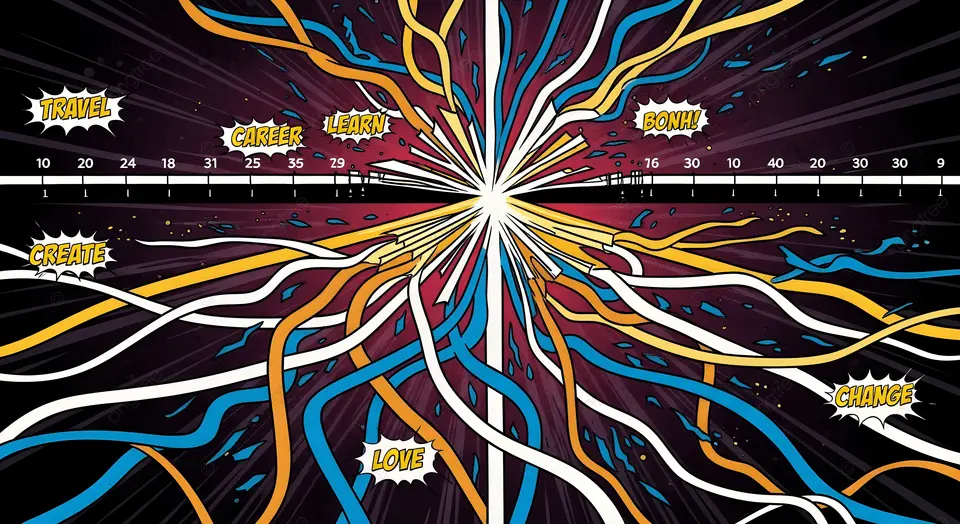
How a Life Becomes a Moment: Why Your Final Instant Reflects How You Lived
We often imagine the final moment of life as something sudden, unpredictable, detached from everything that came before.
A rupture.
An accident.
An ending.
But neuroscience, psychology, and lived experience suggest something very different:
The final moment is not separate from life.
It is life, condensed.
This eleventh step in our journey explores a simple but transformative idea:
If the final instant becomes a timeless inner experience, then its nature is shaped by the life that led to it.
Not symbolically.
Not morally.
But mechanically.
I. The Brain Does Not Reset at the End — It Reveals
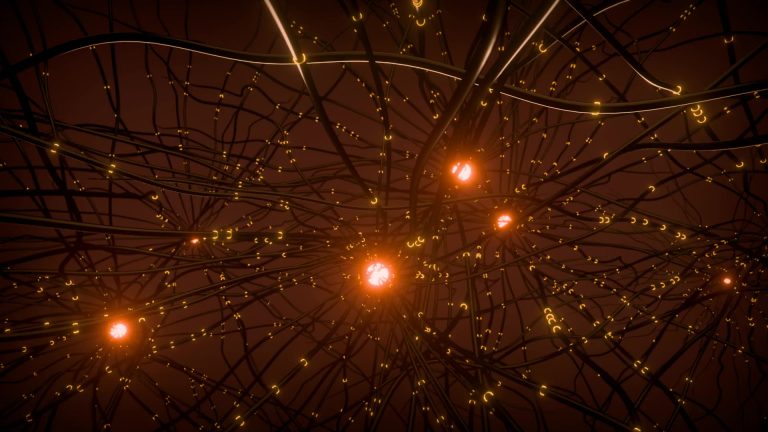
At the end of life, the brain does not suddenly invent a new state of consciousness.
It works with what already exists.
Neural pathways do not disappear.
Emotional habits do not dissolve.
Inner narratives do not reset.
What changes is not content — but context.
When time collapses, when external input fades, when sequencing breaks down, the brain is left alone with its own structure.
And structure reflects history.
The final moment does not ask:
“What should happen now?”
It reveals:
“This is what has been built.”
II. A Life Is Not Remembered — It Is Integrated
Throughout life, experiences are not stored as isolated memories.
They are integrated into:
- emotional tendencies
- interpretive habits
- identity narratives
- bodily responses
Over years, these integrations stabilize.
Someone who repeatedly meets difficulty with resistance builds tension.
Someone who repeatedly meets difficulty with curiosity builds openness.
Someone who repeatedly avoids inner conflict builds fragmentation.
This integration process never stops.
So when the final moment arrives, the brain does not replay events.
It expresses integration.
The moment feels the way life was practiced.
III. Why the Final Moment Feels Like “Truth”
Many people describe intense inner clarity at the edge of consciousness:
“Everything made sense.”
“I saw my life clearly.”
“There was no illusion.”
This is not mystical insight in the supernatural sense.
It is the collapse of defense.
During life, time allows avoidance:
- postponement
- distraction
- justification
- denial
In the final moment, there is no future in which to defer truth.
What remains is emotional coherence.
Not who you wanted to be.
Not who you appeared to be.
But who you repeatedly were.
IV. Eternity as Emotional Continuity
If the final instant is timeless, then it does not evolve.
It stabilizes.
And what stabilizes is not thought — but emotional continuity.
A life lived in chronic fear may crystallize as contraction.
A life lived in resentment may crystallize as heaviness.
A life lived in gratitude may crystallize as lightness.
A life lived in compassion may crystallize as expansion.
This is not heaven or hell imposed from outside.
It is continuity without time.
Eternity, in this sense, is not endless change.
It is unchanging presence.
V. Why This Is Neither Reward Nor Punishment
This idea often triggers resistance, because it sounds like judgment.
It is not.
There is no evaluator.
No scale.
No verdict.
Only coherence.
The brain does not punish.
It does not reward.
It stabilizes what was repeated.
Just as muscles reflect how they were used, consciousness reflects how it was lived.
This is not moral accounting.
It is neurological inevitability.
VI. The Quiet Responsibility of Living
Here is where the idea becomes deeply practical.
If life shapes the final moment, then life is not just something you endure.
It is something you are preparing — unconsciously.
Every reaction you repeat trains the nervous system.
Every emotional avoidance strengthens a pattern.
Every moment of presence reshapes integration.
You are not preparing for death.
You are shaping how truth will feel when nothing distracts you from it.
VII. Why Small Choices Matter More Than Big Moments
A common misunderstanding is to think that only major life events matter.
They don’t.
What matters is frequency.
A dramatic act of kindness once does less than a quiet posture of kindness practiced daily.
A single regret does less than a life spent refusing self-honesty.
The final moment reflects what became familiar.
Not what was exceptional.
VIII. Eternity Is Already Forming
This is perhaps the most unsettling — and empowering — conclusion:
Your eternity is not waiting for you.
It is forming now.
In how you respond to stress.
In how you treat others.
In how you face yourself when no one is watching.
The final moment does not introduce a new reality.
It removes delay.
Conclusion: The Eleventh Step Forward
Article 11 brings the idea back to its most human core:
- Time may collapse
- Memory may become space
- Emotion may shape that space
- Unresolved patterns may loop
- But life itself determines the quality of the final instant
From here, the series can move toward:
- symbolic interpretations of heaven and hell
- why traditions spoke in metaphors
- whether transformation is possible in the final moment
- and the ethical implications of living with this awareness
Not to fear death.
But to live in a way that makes truth inhabitable.