
Judgment in Sacred Texts: What Does It Really Mean?
Why ancient descriptions of judgment may refer to an inner moment, not an external trial.
Introduction
Across ancient civilizations, spiritual traditions describe a moment of Judgment—a decisive instant when the truth of one’s life becomes impossible to escape.
It is often imagined as a cosmic trial, a court, a weighing, or an unveiling.
But when these traditions are studied carefully, a surprising pattern appears:
Judgment is not described as a long process.
It is described as a sudden revelation.
A moment.
An exposure.
An inner truth surfacing with absolute clarity.
This article explores what ancient Judgment actually meant—and how it connects with the final instant of consciousness.
1. Judgment in the Ancient World Was a Mirror, Not a Court
Egypt — The Weighing of the Heart
The heart is weighed against Ma’at’s feather of truth.
If the heart is heavy with wrongdoing, it sinks.
This is not a trial—it is a measurement of your own life.
Your heart reveals itself.
No prosecutor.
No witnesses.
Only the truth you carry.
Christianity — The Great Unveiling
Jesus describes Judgment as exposure, not bureaucracy:
“Nothing is concealed that will not be revealed.” (Matthew 10:26)
Revelation means:
everything hidden becomes visible.
A sudden confrontation with your own truth.
Islam — The Soul Testifying Against Itself
A striking verse says:
“Man is a witness against himself.” (Quran 75:14)
Judgment is self-revelation.
The soul knows.
Nothing needs to be “decided.”
It is already written within.
Judaism — The Book of Remembrance
The “book” is symbolic:
“God will bring every deed into judgment.” (Ecclesiastes 12:14)
But what is a deed?
A memory.
A choice.
A weight on the heart.
Hinduism — Becoming What You Lived
In the Bhagavad Gita:
“At the time of death, a man becomes what he has lived for.”
Not a sentence—
a transformation.
Buddhism — The Mind Reveals Itself
The Bardo Thodol explains that at death:
“Your mind becomes its own judge.”
There is no external force.
Only the truth of your life, reflected back to you.
Across all traditions, Judgment is not about a judge.
Judgment is about truth becoming unavoidable.
2. Judgment Happens in a Moment—Not After a Journey
Contrary to popular imagery, ancient texts do not describe Judgment as:
- a long trial
- days of interrogation
- debates
- witnesses
- negotiation
They describe it as an instant awakening.
A flash.
A realization.
A pure encounter with the truth of your existence.
This aligns perfectly with modern accounts of near-death experiences:
- a sudden life review
- a powerful moment of clarity
- an overwhelming sense of truth
- complete emotional transparency
- instant understanding of right and wrong
People say things like:
“I saw every moment of my life at once.”
“I understood instantly what mattered.”
“I felt the truth in my chest.”
The pattern is identical.
3. Science Observes the Mechanism Behind Ancient Judgment
Judgment in sacred texts mirrors what neuroscience has discovered about the dying brain:
1. The Life Review Phenomenon
Patients describe reliving their entire life in a fraction of a second.
This is supported by studies showing rapid memory activation under extreme conditions.
2. Emotional Amplification
The brain intensifies feelings of:
- guilt
- regret
- love
- compassion
This is the biological equivalent of “moral awareness.”
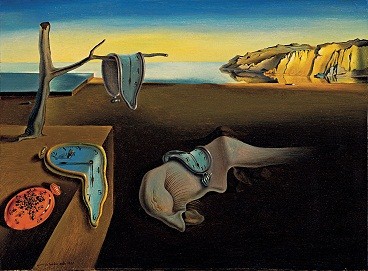
3. Collapse of Time
When time perception breaks down, an instant feels infinite.
This matches the idea of “eternity in a single moment.”
4. Hyper-real Awareness
Near the moment of death, the brain can enter a state of:
- heightened clarity
- enhanced memory
- expanded perception
This mirrors the descriptions of spiritual revelation.
Ancient texts describe what the moment feels like.
Science describes how it happens inside the brain.
Both point to the same event.
4. Judgment Is the Moment Your Life Confronts You
Ancient teachings emphasize:
- no excuses
- no hiding
- no lies
- no escape
- no pretending
The final moment reveals:
- your regrets
- your unhealed wounds
- your kindness
- your betrayals
- your compassion
- your sincerity
- your hidden truth
Not because a divine being is punishing or rewarding you—
but because this is how consciousness behaves when everything else falls away.
Judgment is not external.
Judgment is internal.
You judge yourself with the truth you cannot avoid.
5. The Inner Law: Your Life Determines the Weight of the Final Moment
Ancient teachings repeat the same idea with different symbols:
- light hearts rise
- heavy hearts fall
- pure hearts gain peace
- corrupted hearts face turmoil
This is not cosmic punishment.
It is psychological consequence.
When everything collapses into a single timeless instant:
You experience the emotional truth of your entire life at once.
If your life was filled with love, sincerity, and compassion → the final moment feels peaceful, warm, radiant.
If your life was filled with regret, denial, cruelty, or deception → the final moment feels heavy, dark, painful.
This is the essence of ancient Judgment—a literal experience created by the self.
Conclusion
Judgment in sacred texts is not a cosmic courtroom.
It is a metaphor for the moment when the soul sees its life with perfect clarity.
- Ancient wisdom describes the experience.
- Modern science describes the mechanism.
- Philosophy describes the responsibility.
Judgment is the encounter between your life and your awareness when nothing is left to hide.
It is a moment, not a trial.
A revelation, not a decision.
A truth, not a sentence.
Your life becomes your judge.
Your choices shape your final instant.
Your heart becomes your eternity.