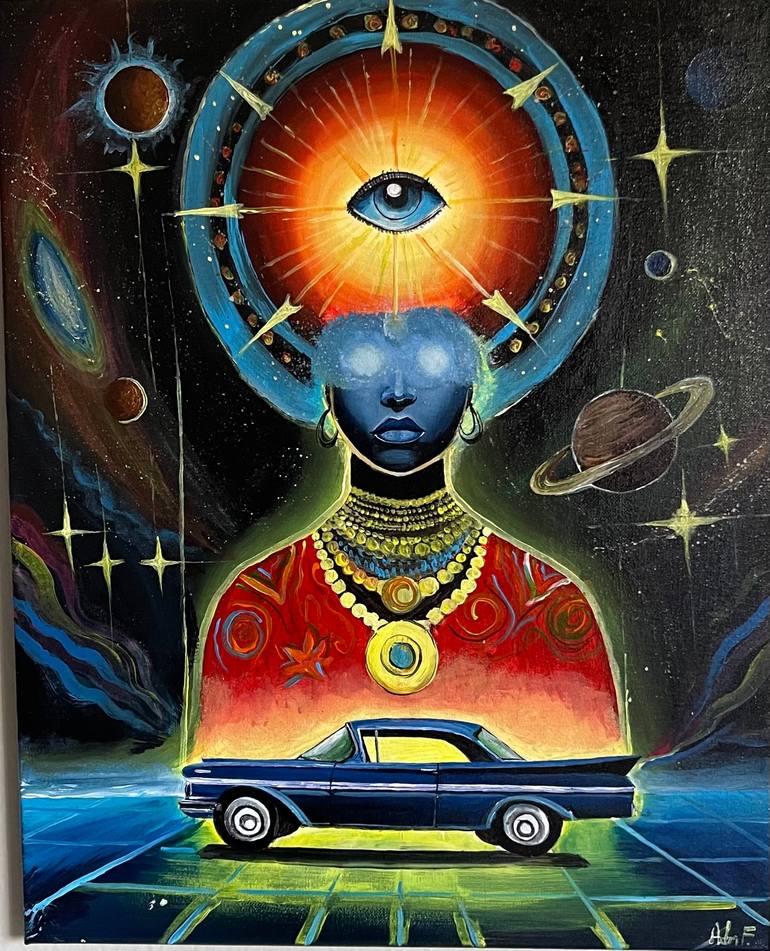
When Time Breaks: Why the Final Instant Can Expand Into an Inner Eternity
e usually imagine time as something external — a neutral flow measured by clocks, calendars, and physics. It seems indifferent to who we are or what we feel.
Yet the moment we observe our own experience, that certainty quietly collapses.
Fear stretches seconds into eternities.
Joy dissolves hours into nothing.
Waiting feels endless.
Regret can replay for years inside a single memory.
Time, as we live it, is not simply something we move through.
It is something the mind creates.
This eighth step in our journey explores a boundary where neuroscience meets inner experience:
If the brain can stretch time during intense moments of life, could the final moment stretch it so completely that it feels eternal?
This question does not belong to belief or speculation. It sits precisely at the intersection of what science already observes — and what philosophy has long intuited.
I. The Brain Does Not Measure Time — It Constructs It

Inside the brain, there is no internal clock ticking seconds away.
Time is assembled.
Neuroscience shows that our sense of duration emerges from the interaction of several processes:
- attention
- emotional intensity
- memory encoding
- bodily arousal
- survival relevance
The brain does not ask, “How long did this last?”
It asks, “How much did this matter?”
This is why:
A minute in danger feels endless.
A minute of boredom feels heavy.
A minute with someone you love vanishes instantly.
The brain edits time the way a filmmaker edits scenes — not according to objective duration, but according to meaning.
So the real question becomes unavoidable:
What happens when meaning reaches its absolute peak — the final moment of consciousness?
II. Why Time Slows Down in Crises: The Biology of Expanded Moments
When humans face extreme danger, the brain enters an emergency state. Two key systems activate almost instantly:
- The amygdala, which triggers survival responses
- The locus coeruleus, which floods the brain with norepinephrine
This chemical surge produces:
- hyper-focus
- heightened sensory detail
- rapid memory recording
- a feeling of “slow motion”
Survivors often say:
“Everything slowed down.”
“I noticed every detail.”
Time itself did not slow.
Consciousness accelerated.
If a few seconds of danger can feel vast…
What happens when the moment contains your entire life?
III. The Collapse of Time at the Edge of Consciousness
Under normal conditions, time flows because the brain compares now with just before. This comparison creates continuity.
At the threshold of death, this mechanism destabilizes.
As oxygen decreases and neural balance shifts, the brain may:
- lose temporal sequencing
- blur “before” and “after”
- merge memory with perception
- activate emotional networks globally
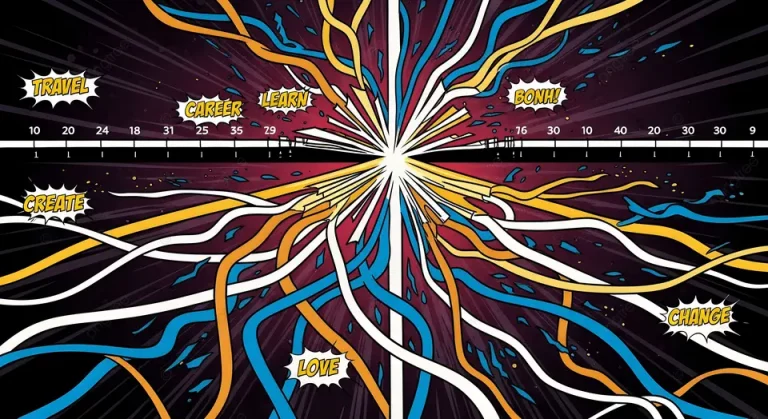
Time stops being a line.
It compresses into a single, dense point.
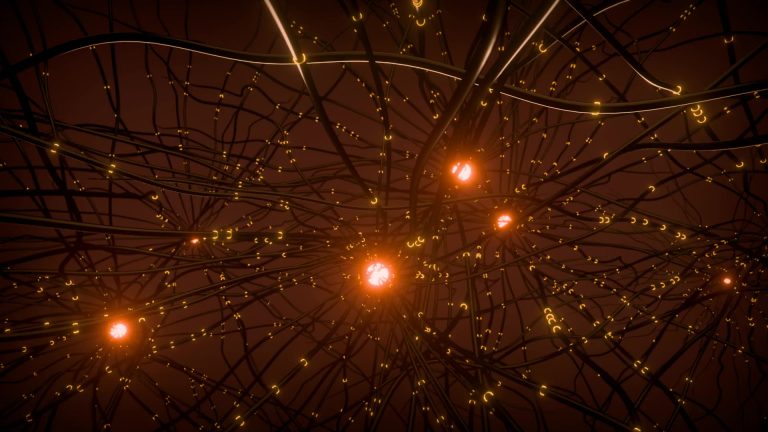
Instead of replaying life chronologically, memory activates emotionally — all at once. Brain regions linked to autobiographical identity (often associated with the default mode network) integrate intensely.
Philosophers called this “the return.”
Neuroscience calls it “global integration.”
Spiritual traditions call it “unveiling.”
You may simply recognize it as you.
IV. Why the Final Instant Can Feel Infinite
Near-death survivors often report:
“I lived a lifetime in seconds.”
“There was no time.”
“It felt endless.”
This is not proof of an afterlife.
It is evidence of how consciousness behaves when freed from linear constraints.
Without temporal sequencing:
- seconds lose meaning
- memories activate simultaneously
- emotions become environments
- identity expands
Eternity is not infinite duration.
Eternity is the absence of duration.
Without comparison, a single instant can feel limitless.
V. What Shapes This Inner Eternity
If the final moment becomes an inner universe made of memory and emotion, its nature cannot be random.
It reflects the life that formed it.
A life of gratitude → lightness
A life of fear → heaviness
A life of regret → echo
A life of compassion → expansion
This is not punishment.
This is not reward.
It is coherence.
The brain does not invent a new world.
It reveals the one you have been building all along.
VI. The Quiet Lesson Hidden in the Science

This idea does not ask for fear.
It asks for awareness.
Every choice shapes memory.
Every emotion leaves an imprint.
The deeper question is no longer:
What happens after death?
But:
What inner world am I creating now?
Because you may inhabit it completely — in a single moment that feels like forever.
Conclusion: The Eighth Step Forward

Article eight is a threshold.
- Time can fracture
- Consciousness can expand
- Memory and emotion can merge
- A final instant can feel infinite
- And its texture reflects the life lived
From here, the journey deepens.
Next articles will explore memory as architecture, emotional imprinting, ancient intuition, and the unifying hypothesis at the heart of this work.
Not about death.
But about how we live — knowing the final moment may simply reveal it.